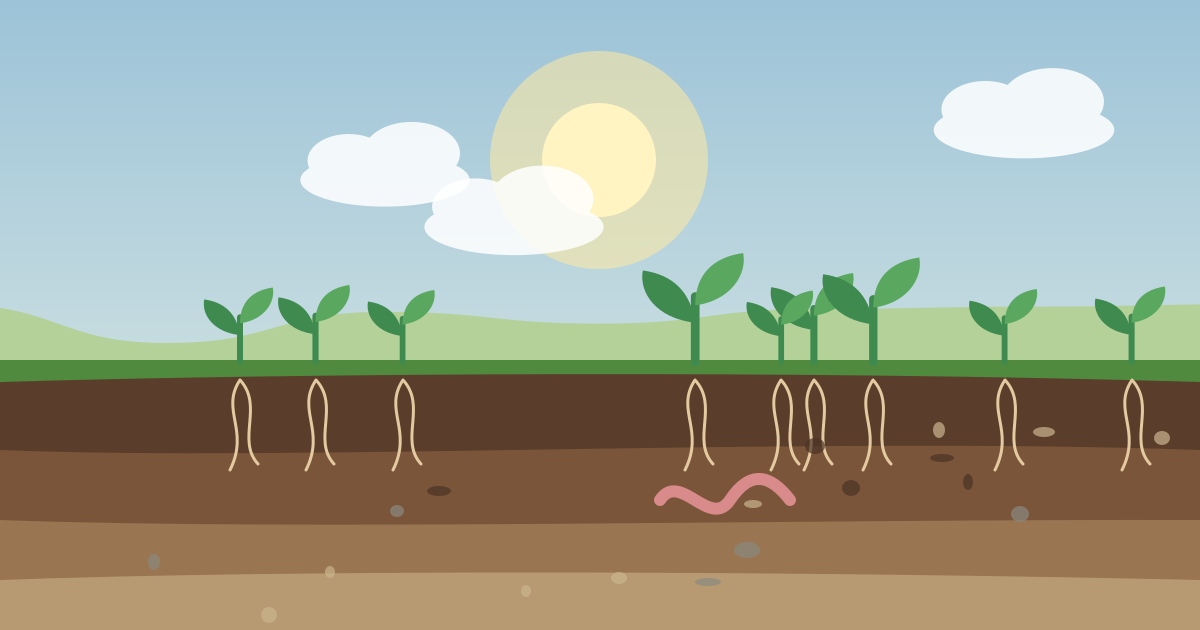
Soil is alive. A teaspoon of healthy topsoil holds billions of microbes, along with fungi, mites and worms that cycle nutrients, build structure and suppress disease. Soil health is the ability of that living system to keep functioning as a vital ecosystem for plants, animals and people. It is not a mystery, and it is not a fad. It is a short list of management principles that conservation agencies have been teaching for decades, backed by plenty of research and farmer experience.
The five principles
The Natural Resources Conservation Service teaches soil health through a handful of principles, described on its soil health pages. In plain language:
- Minimize disturbance. Tillage breaks apart soil aggregates, speeds up decomposition of organic matter and leaves soil exposed.
- Maximize soil cover. Residue and living cover protect against raindrop impact, hold moisture and moderate soil temperature.
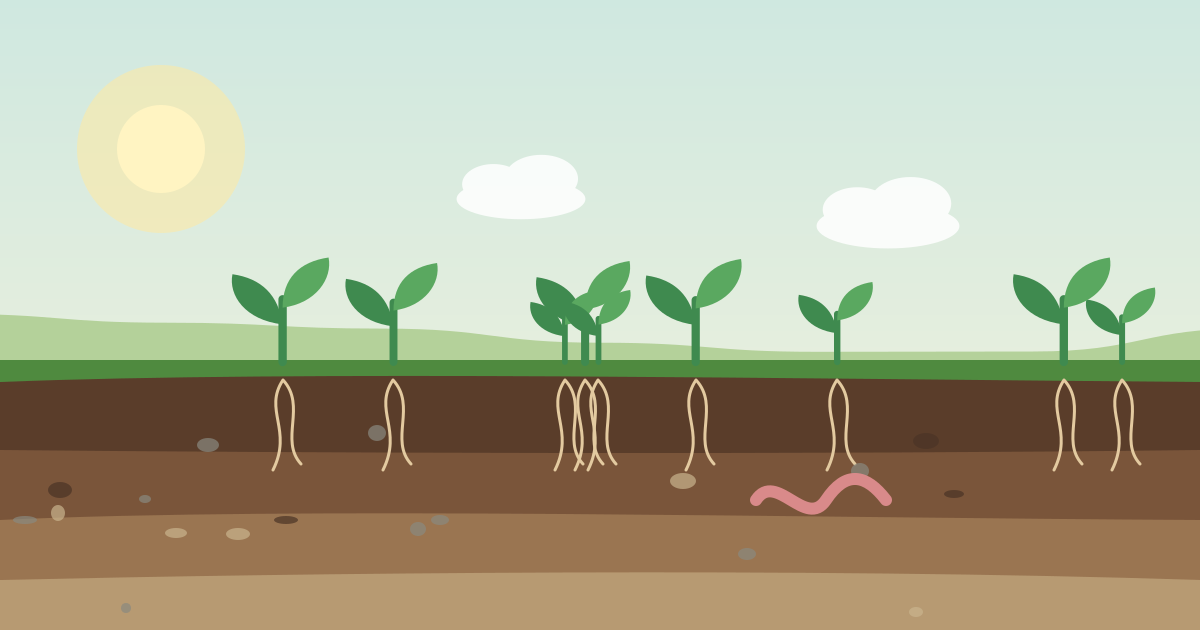
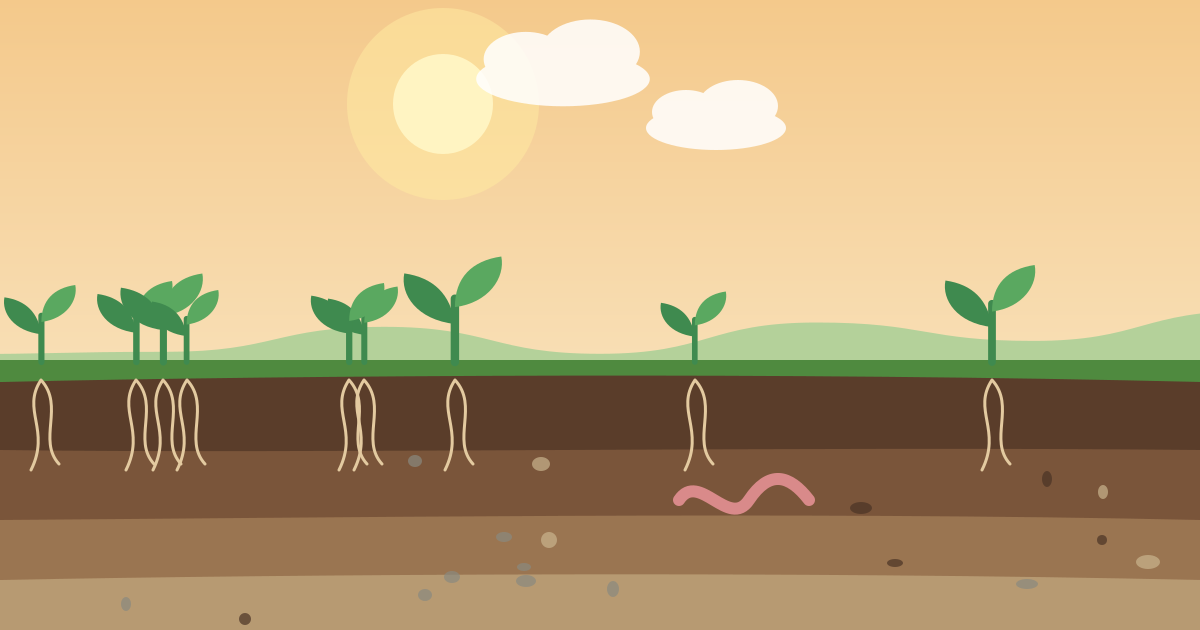
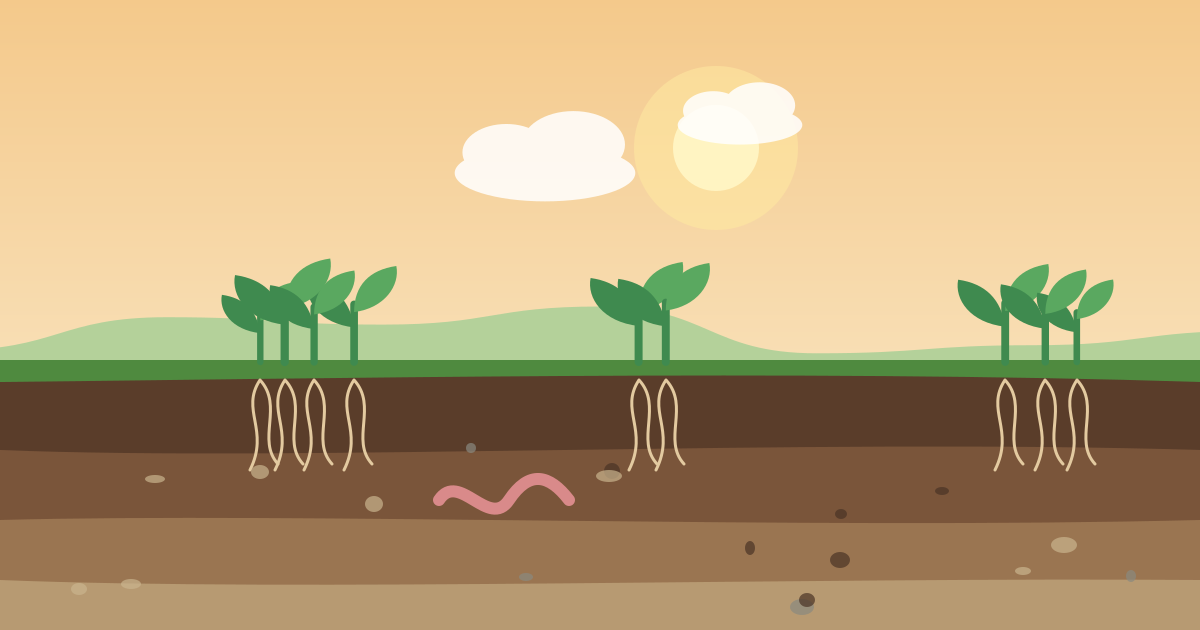
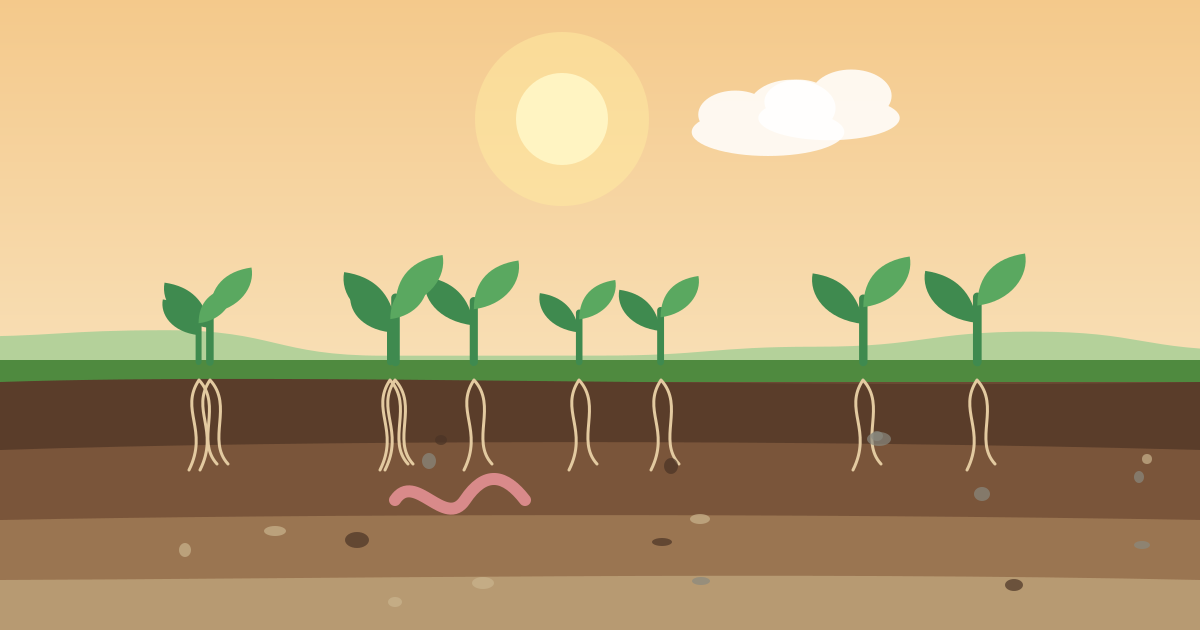
- Maximize living roots. Roots feed soil organisms through root exudates, so more months with living plants means more biological activity.
- Maximize diversity. Different plants feed different organisms and break pest cycles.
- Integrate livestock where possible, since grazing animals can cycle nutrients and stimulate plant growth when managed well.
Every practice below is a way to apply one or more of these principles.
Practices that apply them
Reduced tillage and no-till
Less tillage protects soil structure and cuts fuel and labor. Moving from conventional tillage to no-till is a process, not a switch, and results depend on residue management, planter setup and weed control. See reduced tillage and no-till.
Cover crops
Planting a crop between cash crops keeps roots in the ground and soil covered. Species choice depends on goals: grasses scavenge nitrogen and add biomass, legumes fix nitrogen, brassicas open compacted layers. The SARE book Cover Crops and our cover cropping guide cover species and timing.
Diverse rotations
A rotation with different crop types breaks pest and disease cycles and spreads nutrient demand across different root depths. See crop rotation. The SARE book Diversifying Cropping Systems shows ways to add crops.
Organic amendments
Compost, manure and other organic materials add nutrients and feed soil life. They need to be managed to avoid nutrient excess. See compost use and manure management.
Managed grazing and integration
Rotational and adaptive grazing, and grazing cover crops, bring animals into the soil health cycle. See rotational grazing and livestock and crop integration.
Perennials and trees
Buffers, windbreaks, perennial forages and agroforestry keep roots in the ground year round. See riparian buffers and agroforestry.
How to tell whether it is working
Yields are a slow, noisy signal of soil change. Use a set of indicators you can check each year.
- Spade test. Dig a block of soil and look for crumb structure, root depth, earthworms and smell. Compare against a neighbor field or a fence row.
- Infiltration. A simple ring test shows how fast water enters soil. Faster infiltration means less runoff.
- Aggregate stability. A slake test drops a soil clod in water to see how well it holds together.
- Soil organic matter. A lab test, repeated in the same way every year or two.
- Cover and residue. Photos from set points each fall and spring.
- Compaction. A penetrometer or a simple probe shows where roots hit hard layers.
Combine these with lab tests for nutrients and pH. The soil testing guide explains how to sample consistently, and the Web Soil Survey provides baseline soil descriptions for your fields.
Costs and payoffs
Soil health practices often show benefits in three ways: lower input costs, more stable yields in stress years, and reduced erosion losses. The economics depend on the farm. Reduced tillage saves fuel and time but may require a new planter or more careful weed management. Cover crops cost seed and labor, with benefits that vary. See the profitability guide and cost-share programs.
Getting cost-share
NRCS programs support soil health practices. EQIP can cost-share practices like cover crops, residue and tillage management and nutrient management. CSP pays producers for maintaining and adding conservation across their operations. A conservation planner at your local USDA Service Center will assess your land and walk through options. Find your office with the locator or in your state page in the directory.
Matching practices to problems
| Problem you see | Practices to consider |
|---|---|
| Erosion and gullies | Residue cover, cover crops, no-till, grassed waterways, buffers |
| Compacted layers | Deep-rooted covers, controlled traffic, avoiding wet-soil field work |
| Low organic matter | Compost or manure, cover crops, perennials, reduced tillage |
| Weed pressure | Rotation changes, cover crop mulch, targeted cultivation |
| Poor water infiltration | Residue, aggregate building, reduced tillage |
| Pest and disease buildup | Longer rotations, diverse covers, resistant varieties |
- Pick the field with the clearest problem or best chance of success.
- Take a baseline: soil test, spade test, infiltration, cover photos.
- Choose one or two practices, for example no-till soybeans after a cereal rye cover crop.
- Run a side-by-side strip on part of the field.
- Record costs and yields and repeat soil checks each year.
- Adjust and expand to more acres as you learn.
Resources for learning more
The Soil Health Institute conducts research and develops measurement tools. The Soil and Water Conservation Society provides community and publications. SARE's Building Soils for Better Crops is a classic reference on soil biology, organic matter and fertility. Local conservation districts and extension offices run workshops, and many states have soil health partnerships and farmer-led groups.
Bottom line
Healthy soil is built by keeping it covered, undisturbed, rooted, diverse and, where possible, grazed. None of the practices is complicated, but they interact, and the best combination depends on your climate and operation. Start small, measure, and use the help that is available.
Frequently asked questions
What are the NRCS soil health principles?
Minimize disturbance, maximize soil cover, maximize living roots, maximize biodiversity, and integrate livestock where it fits.
How long does it take to improve soil health?
Some changes, like aggregate stability and infiltration, can show up within a few years. Organic matter changes more slowly and varies by climate and soil.
Can I get paid to adopt soil health practices?
NRCS programs such as EQIP and CSP can cost-share and pay for many soil health practices, subject to eligibility and funding.
How do I measure soil health on my farm?
Combine simple field tests such as spade and infiltration checks with consistent lab tests for organic matter and nutrients, and keep photos of cover through the seasons.