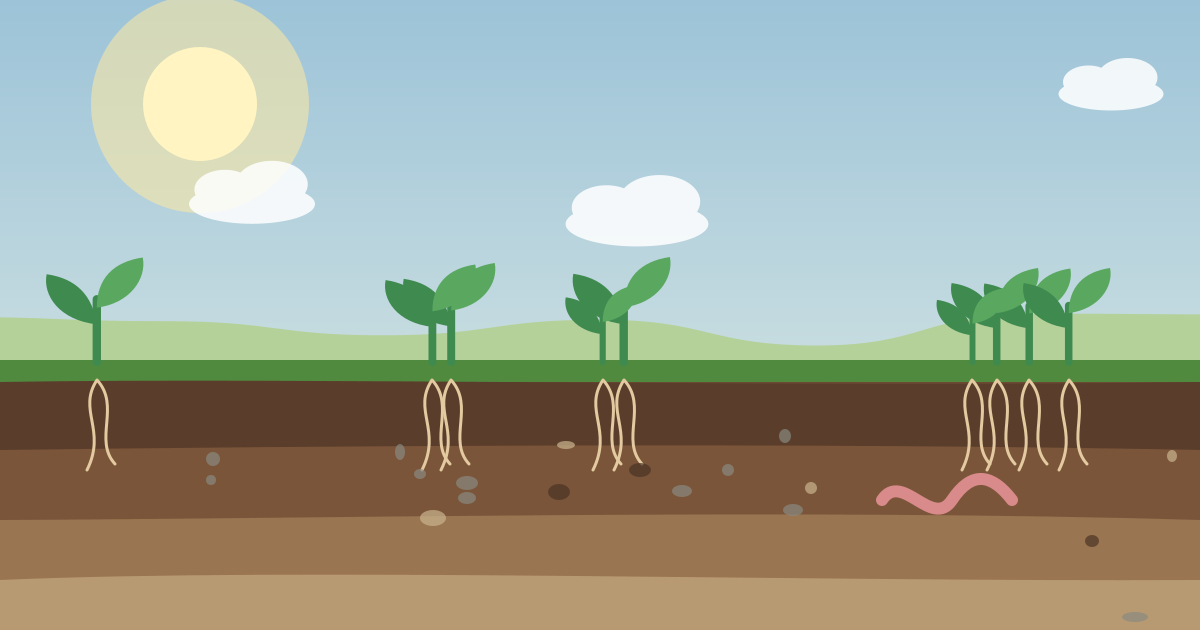
Cover crops are plants grown between cash crops, or alongside them, to protect and improve soil rather than to harvest. Farmers have used green manures for centuries, and modern interest comes from their ability to reduce erosion, suppress weeds, scavenge nutrients and add organic matter. They are also easy to get wrong. Success mostly comes down to clear goals, species fit, timing and a plan for ending the crop.
Decide your goal first
Different covers do different jobs, so name the main reason you want one.
- Reduce erosion. Fast-establishing grasses like cereal rye or oats that provide ground cover and root mass.
- Supply nitrogen. Legumes such as crimson clover, hairy vetch or field peas fix atmospheric nitrogen, and release some to the following crop.
- Scavenge leftover nitrogen. Grasses and brassicas take up soluble nitrogen after harvest and hold it over winter.
- Suppress weeds. Dense, early-growing covers like cereal rye shade and smother small-seeded weeds, and their residue acts as mulch.
- Break compaction. Taproot species such as tillage radish penetrate dense layers.
- Provide forage. Many covers can be grazed or harvested, adding income. See livestock and crop integration.
- Support pollinators and beneficials. Flowering covers such as buckwheat, phacelia and clovers.
Choosing species
A short comparison helps.
| Type | Examples | Strengths | Watch for |
|---|---|---|---|
| Cool-season grasses | Cereal rye, oats, winter wheat, triticale | Cover, erosion control, nitrogen scavenging, weed suppression | Can tie up nitrogen for the next crop; termination timing |
| Legumes | Crimson clover, hairy vetch, field pea, red clover | Nitrogen fixation, forage | Slower fall growth; seed cost; can host some pests |
| Brassicas | Radish, turnip, rape | Fast fall growth, compaction relief | Winterkill in cold areas; can leave bare soil in spring |
| Warm-season covers | Sorghum-sudangrass, cowpea, buckwheat | Summer biomass, weed suppression | Termination needs; season window |
Mixes combine functions, but a single well-managed species often outperforms an overcomplicated mix. If you are starting, choose cereal rye ahead of soybeans or oats and a legume ahead of corn, and ask your extension educator what local trials recommend. The SARE publication Managing Cover Crops Profitably includes species charts and management guidance for many regions.

Seeding methods and timing
Drilling gives the best seed-to-soil contact and consistent depth. Broadcasting is fast and cheap but depends on moisture and may need light incorporation. Aerial seeding and interseeding into standing crops let you start covers before harvest, which is valuable where the window after harvest is short. Seeding date matters more than any other variable: fall-seeded covers need enough warm days to establish before winter. A late planting date may call for cereal rye, which tolerates cold and germinates in cool soil, over less hardy species.
Seeding rates depend on method and goal, and your seed supplier or local extension office can supply a recommendation. Do not skimp: thin stands do little.
Termination
How and when you end a cover crop is where many problems happen.
- Spring-killed grasses can be terminated with herbicide, rolling and crimping, mowing or tillage. The timing relative to planting depends on the crop. Terminating cereal rye early reduces the risk of nitrogen tie-up and moisture depletion.
- Legumes release nitrogen as they break down, so timing affects when the following crop gets it.
- Winterkilled species need no termination in cold climates, but leave little cover in spring.
- Organic systems rely on rolling and crimping, mowing or tillage, because herbicides are not allowed.
Always check the label and local guidance for herbicides, and consider your crop insurance rules, because termination dates may be specified. The Risk Management Agency publishes cover crop guidance for insured crops.
Fitting covers into the rotation
- After corn silage or early-harvested crops, there is a long window, making almost any cover feasible.
- After corn or soybean grain, the window is shorter; cereal rye is a reliable choice.
- Before corn, leave enough time and manage nitrogen carefully.
- Before soybeans, cereal rye is common, with planting green in some systems.
- In vegetable systems, shorter-season covers fit between crops.
See crop rotation for broader planning.
Costs and returns
Costs include seed, seeding, termination and labor. Returns include erosion reduction, weed suppression, nitrogen credits, forage and long-term soil improvement. Most of the benefits build over time, so a three- to five-year view is reasonable. Cost-share changes the picture: EQIP and CSP can pay for cover crops in many states, with payment rates set at the state level. Check with your NRCS office, listed in the directory.
Common mistakes
- Planting too late. The most common failure, and one of the hardest to fix.
- No termination plan. Know what you will use and when.
- Ignoring nitrogen. Grass covers can tie up nitrogen, and legumes may not supply what you expect.
- Starting too big. Try one field first.
- Skipping the drill or planter check. Planting into heavy residue needs good equipment setup.
- No records. Track dates, rates, species, costs and results.
Troubleshooting
If the stand is thin, check seed-to-soil contact, seeding date and moisture. If the following crop looks yellow, check for nitrogen tie-up and adjust fertilizer next time. If slugs, voles or pests build up in residue, scout early and adjust management. Local extension educators and conservation districts often have the best advice about regional problems.
Learn more
Cover Crops and Managing Cover Crops Profitably from SARE are free and thorough. The USDA NRCS soil health pages provide conservation practice context. Reduced tillage and soil health practices pair naturally with cover crops.
Bottom line
Choose a goal, pick a species that fits it, seed early, plan termination and start on a single field. Cover crops reward patience and attention to detail, and payments are available to help.
Frequently asked questions
What is the easiest cover crop to start with?
Cereal rye is widely used because it establishes in cool weather and provides strong ground cover and weed suppression, but termination timing matters.
When should I plant cover crops?
As early as practical after harvest, or interseeded before harvest, so the crop establishes before winter. Date matters more than almost any other factor.
Do cover crops pay?
They often produce benefits slowly and costs immediately. Cost-share programs can offset costs, and results vary by farm and practice.
Can cover crops affect crop insurance?
Yes. Termination dates and rules can matter, so check guidance from the Risk Management Agency and your agent.