Carbon sequestration means moving carbon from the atmosphere into a long-lived pool. On farms, those pools are soil organic matter, woody biomass in trees and shrubs, and perennial roots. Interest has surged because farms hold large areas and because the practices that store carbon often improve soil and water too. The potential is real and the limits are real, and farmers deserve to hear both.
The basic mechanism
Plants fix carbon dioxide through photosynthesis. Part of that carbon ends up in leaves, stems, roots and root exudates. When plants die or are harvested, some carbon returns to the air as microbes decompose residues, and some is stabilized in soil organic matter or stays in wood. Sequestration happens when more carbon enters a pool than leaves it, over time. Any change in management that increases inputs or reduces losses can shift the balance, and any reversal can shift it back.
Where carbon can be stored on farms
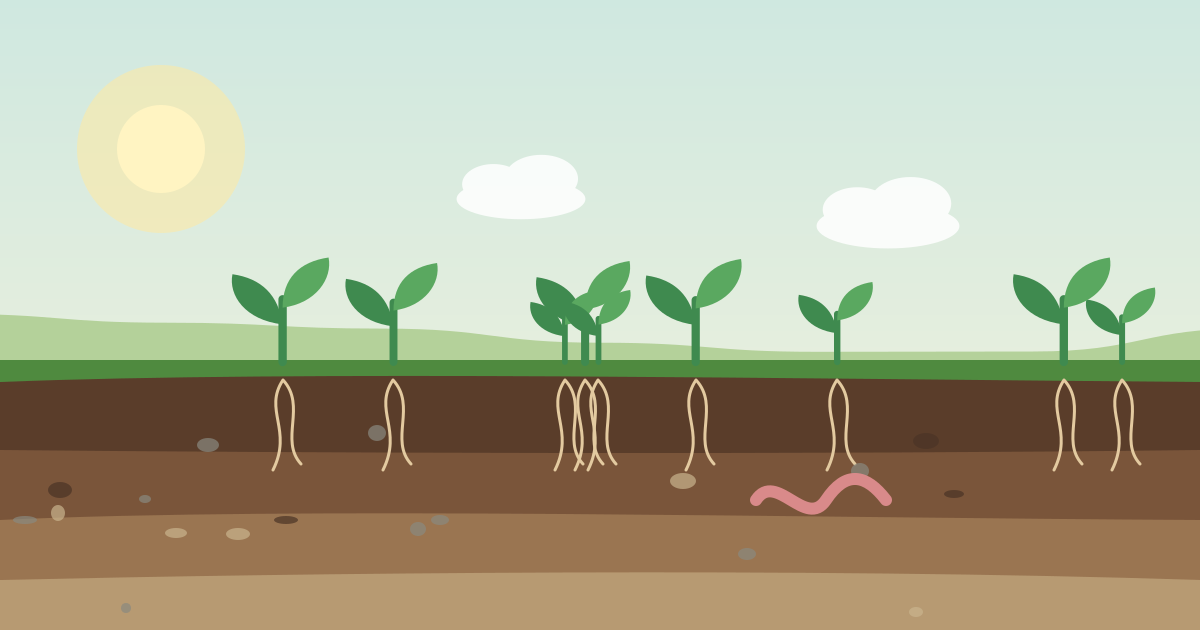
Soil. Soil holds the largest pool. Practices that add more plant carbon and disturb soil less can raise soil organic carbon, though slowly and with variability. See soil carbon practices.
Trees and shrubs. Woody plants store carbon in trunks, branches and roots, often for decades. Windbreaks, riparian buffers, hedgerows, silvopasture and alley cropping all add woody biomass. See agroforestry basics, riparian buffers and hedgerows.
Perennial grasses and forages. Deep roots and year-round cover build carbon, and converting marginal cropland to perennial cover is among the strongest options. The Conservation Reserve Program has long supported such conversion. See the FSA CRP page.
Wetlands and organic soils. Restoring wetlands and avoiding drainage of organic soils protect large carbon stocks, since drained peat soils lose carbon rapidly. See constructed wetlands.

How much is realistic?
Rates differ widely. Trees and perennial conversions can accumulate substantial carbon per acre over many years. Soil carbon gains from practices such as cover cropping on annual cropland are usually smaller per acre per year and slow over time as soils approach a new equilibrium. COMET-Farm, USDA's free online tool, estimates carbon and greenhouse gas outcomes for practices using your location and management, and COMET-Planner estimates practice effects at a county level. Both give ranges that depend on models and assumptions. Use the COMET-Farm site to compare scenarios for your own fields.
Remember, sequestration is only one half of the picture. Net climate benefit also depends on emissions of methane and nitrous oxide from the same land. See greenhouse gas sources on farms.
Permanence, additionality and leakage
If you want to sell carbon benefits, you will meet three terms.
- Permanence: how long carbon stays stored. Soil carbon can be released if practices change, a drought or fire occurs, or land use changes. Trees can burn or be harvested.
- Additionality: whether the storage would have occurred without the payment. Practices you were already doing may not count.
- Leakage: whether the project simply shifts emissions elsewhere, such as taking land out of production and increasing output on other land.
These concepts shape how programs pay and what contracts require. See carbon markets: basics for farmers and carbon contract risks.
Measurement
Measuring sequestration is harder than it sounds.
- Soil carbon changes slowly relative to field variability, and sampling at consistent depths and locations is essential.
- Models estimate change using inputs such as practices, weather and soil data, and carry uncertainty.
- Tree carbon is estimated from growth tables based on species, age and spacing, which is easier to measure than soil carbon.
- Remote sensing helps track cover and land use.
Programs differ in whether they pay for modeled outcomes, measured outcomes or practices. Ask how your payments are calculated and what happens if measurements disagree with models.
A note on wetlands and peat soils
Organic soils such as peat and muck hold enormous carbon, built up over thousands of years under waterlogged conditions. Drainage exposes that carbon to oxygen, and it is lost as carbon dioxide and through subsidence of the land surface itself. Where such soils are farmed, raising water tables, switching to crops that tolerate wetter conditions or restoring wetland can slow the losses dramatically. These are site-specific decisions with big economic consequences for the farms involved, so they call for local expertise and, in many cases, conservation program support.
Practices that make sense anyway
The strongest case for carbon-friendly practices is that they improve farm function. Cover crops, diverse rotations, reduced tillage, perennials, trees and good grazing improve soil structure, water capture, habitat and often costs. If they also store carbon, that is a bonus, and payments, if available, help. If the economic case rests entirely on carbon payments, think hard about risk.
Fitting practices into a farm
- Start with problems, such as erosion, wet corners, or low-value fields.
- Match practices to those places. A buffer on a creek edge, a windbreak on a windy side, perennial cover on a marginal field.
- Add soil practices on working fields gradually.
- Estimate with COMET-Farm, and record practices carefully.
- Check programs. NRCS programs and CRP may pay for the practices directly. See EQIP, CSP and cost-share programs.
Help and information
The USDA Climate Hubs provide regional carbon and climate information, and NRCS staff can help design conservation practices. The Agricultural Research Service conducts long-term soil carbon research. Local help is listed in the directory.
Bottom line
Farms can store carbon in soils, trees and perennial cover, with the largest and most durable gains from woody and perennial systems. Gains are variable, slow and reversible, so treat numbers as estimates, choose practices with other benefits and read any carbon contract with care.
Frequently asked questions
Where is carbon stored on a farm?
In soil organic matter, woody biomass in trees and shrubs, and roots of perennial plants, with the largest soil stocks in grasslands and wetlands.
Is soil carbon storage permanent?
Not necessarily. Carbon can be released if tillage resumes, cover is dropped, drought or fire occurs, or land use changes.
Which practices store the most carbon?
Trees, perennial cover and wetland restoration generally store the most per acre, while annual cropland practices store less and more slowly.
Can I estimate my farm's carbon change?
Yes, USDA's COMET-Farm tool provides model-based estimates for your fields and practices, with uncertainty.